How do golf launch monitors work? In short, they measure what the club and ball are doing in the first moments after impact, then report or calculate the shot from there. The technology inside decides which numbers are measured, which are calculated, and how much room you need.
The short answer
Every launch monitor does two jobs. It captures data around impact, and it turns that data into numbers you can use: club speed, ball speed, launch, spin and carry. There are two main ways to capture the data, radar and cameras, and some units combine both.
Radar launch monitors
A doppler radar unit sends out a microwave signal that bounces off the club and the ball. By measuring how that signal changes, it tracks how they move through space. Because radar follows the ball after it leaves the club, it can observe the actual flight, including shape, apex and distance, rather than predicting it.
Two practical points follow from how radar works:
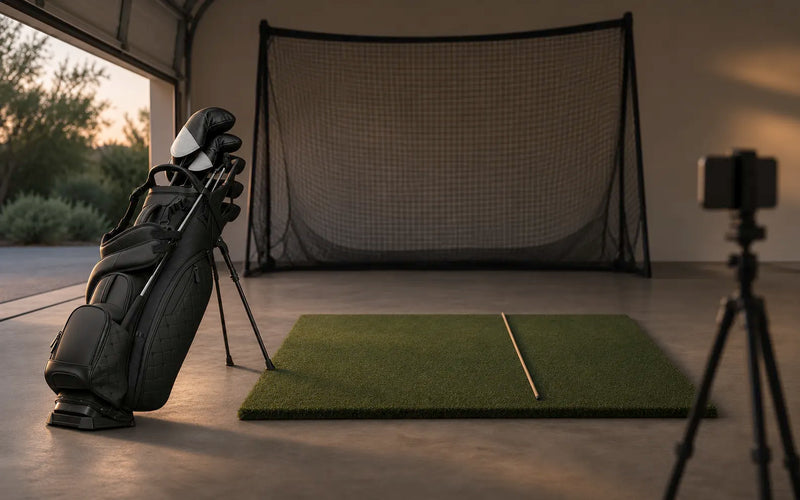
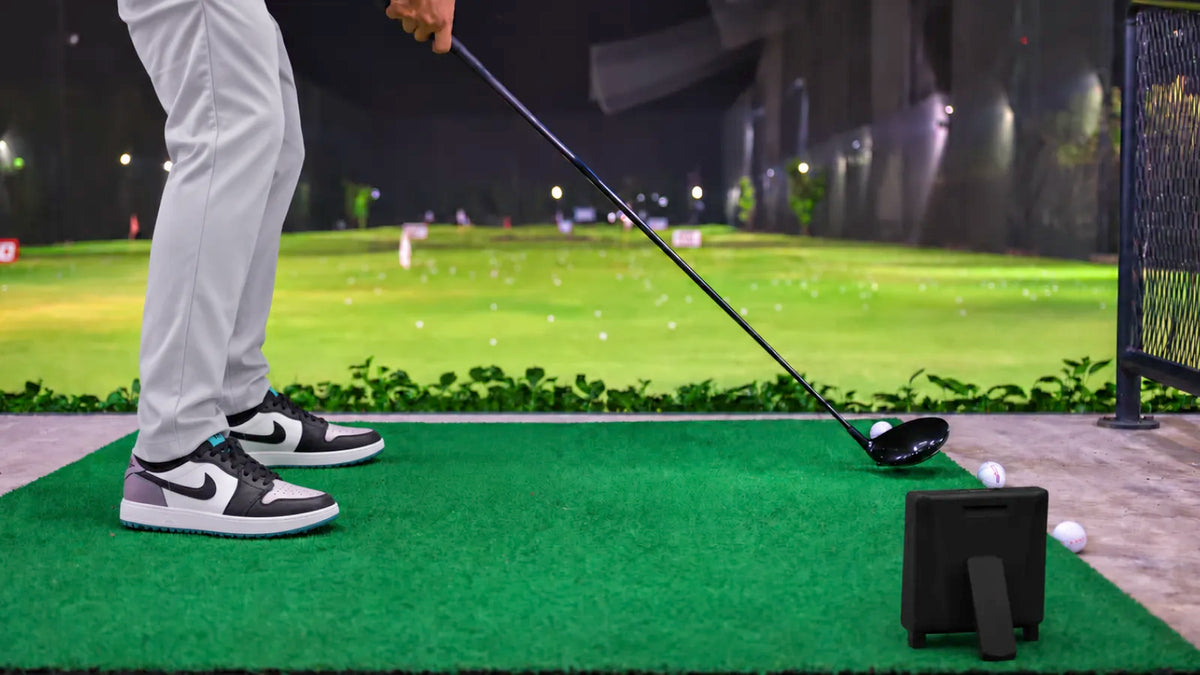
- It sits behind you. Radar units are placed behind the ball, looking down the target line, so they need depth in the room.
- It likes ball flight. Outdoors, it can see the ball travel. Indoors, it sees a short flight into a net or screen and works from that.
The Shot Scope LM1 is a compact example. It uses K-band doppler radar and is placed 55 inches (1.4 meters) behind the ball. It reports club speed, ball speed, smash factor, carry distance and total distance. Its product description is clear that it does not measure spin, club path, attack angle or face angle.
Camera launch monitors
A camera, or photometric, unit takes thousands of images per second around impact. It measures the club and ball directly in that tiny window, then uses physics and algorithms to calculate the rest of the flight.
- It sits beside you. Camera units sit off to the side of the hitting area, so they need less depth than radar.
- It likes light. Because it relies on images, good lighting matters.
- Flight is predicted. The unit sees impact, not the full flight, so things like wind are not part of what it measures.
Hybrid launch monitors
Some units combine both approaches. The FlightScope Mevo Gen2 uses what FlightScope calls Fusion Tracking: 3D doppler radar combined with synchronized image processing. It reports 17 full-swing parameters, including carry, ball speed, club speed, launch angles, spin rate, spin axis and angle of attack.
It still follows radar's rules on space. Indoors, it needs 16 feet in total: 8 feet of ball flight plus 8 feet behind the ball. Spin readings indoors also need the included aluminum stickers or Titleist RCT balls.
Measured vs calculated: why it matters
Every launch monitor shows some numbers it measured and some it worked out. Neither is wrong, but it changes how you read the screen.
- If a unit measures ball speed and launch but calculates carry, the carry number is only as good as the inputs and the model.
- If a unit does not report spin at all, it cannot tell you why one shot balloons and another falls out of the sky.
- If a unit reports club data such as attack angle, you can link a result to something in your swing.
Before you buy, check the spec sheet for the exact numbers you want, and whether they are measured indoors as well as outdoors.
One number to check: smash factor
If you only learn one launch monitor number, make it smash factor. It is ball speed divided by club speed, and it tells you how well you transferred speed to the ball.
Example: a club speed of 90 mph and a ball speed of 130 mph gives 130 ÷ 90 = 1.44. If your club speed stays at 90 but your ball speed drops to 120, smash factor falls to 1.33. Same swing speed, worse strike.
That makes smash factor a good first number for any golfer, and even a basic radar unit like the LM1 reports it. Track it for one club over a few sessions and you will learn more about your contact than any single swing can show.
Which type fits your practice?
- You want speed and distance numbers on a budget: a compact radar unit that reports club speed, ball speed and carry.
- You want spin and club data, indoors and out: a unit that measures them directly and fits your room's depth.
- Your room is short front to back: check the setup distance before anything else.
Compare units side by side in our Launch Monitors collection. For what these numbers look like at the top of the game, see how the PGA Tour's longest hitters gain distance, and for how we decide what to stock, read the four-question test we run before stocking anything.
Sources
- GOLF.com, "Launch Monitor 101: Which is better, Doppler or Camera?" (April 29, 2025)
- Product descriptions, Elevation Golf Lab store, checked October 29, 2026: Shot Scope LM1 Launch Monitor, Mevo Gen2.